Itagaki Taisuke
21:47
板垣退助
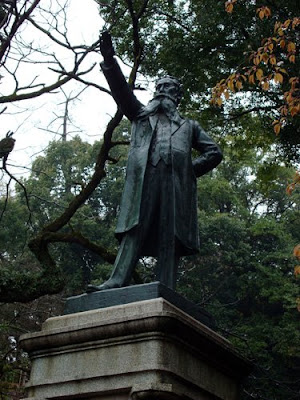
Itagaki Taisuke (1837-1919), a nationalist politician of the Meiji Period, was a leader of the Popular Rights Movement and became the head of Japan's first political party - the Jiyuto (Liberal Party).
Born to a samurai family in present-day Kochi Prefecture on Shikoku, Itagaki was active in the overthrow of the Tokugawa regime and became a minister in the new Meiji government.
Itagaki resigned his official post in 1873 over what he thought was the excessive power of the Satsuma-Choshu factions in the new government and their failure to invade nearby Korea. Satsuma (present-day Kagoshima) and Choshu (Yamaguchi) were the two areas that had been dominant in the overthrow of the shogunate.
Returning to his native Kochi, Itagaki set up the Victorian-style, self-help organization - the Risshisha - and made calls for a more representative form of government and popular rights. This initially local movement coalesced into the national Freedom and People's Rights Movement (自由民権運動), an unstable alliance of samurai and peasants, agitating for an elected assembly.
In 1881 Itagaki was instrumental in setting up Japan's first political party - the Jiyuto (Liberal Party) and later became Home Minister in 1898. Then, as now, Japanese politics was rife with factional rivalries and Itagaki retired from public life in 1900.
Itagaki was the victim of an assassination attempt by a right-wing thug armed with a knife in Gifu in 1882. Stained with blood, he called out his most famous phrase: "Itagaki may die, but liberty never."
© Japan Visitor.com
Yahoo Japan Auction Service
Book a Japanese Hotel with Bookings
Book the Ginza Kokusai Hotel Tokyo
Tokyo Serviced Apartments
Japanese Friends
Rough Guide To Japan
Tags
Shikoku Itagaki Taisuke Kochi Japanese politics
Itagaki Taisuke (1837-1919), a nationalist politician of the Meiji Period, was a leader of the Popular Rights Movement and became the head of Japan's first political party - the Jiyuto (Liberal Party).

Born to a samurai family in present-day Kochi Prefecture on Shikoku, Itagaki was active in the overthrow of the Tokugawa regime and became a minister in the new Meiji government.
Itagaki resigned his official post in 1873 over what he thought was the excessive power of the Satsuma-Choshu factions in the new government and their failure to invade nearby Korea. Satsuma (present-day Kagoshima) and Choshu (Yamaguchi) were the two areas that had been dominant in the overthrow of the shogunate.
Returning to his native Kochi, Itagaki set up the Victorian-style, self-help organization - the Risshisha - and made calls for a more representative form of government and popular rights. This initially local movement coalesced into the national Freedom and People's Rights Movement (自由民権運動), an unstable alliance of samurai and peasants, agitating for an elected assembly.
In 1881 Itagaki was instrumental in setting up Japan's first political party - the Jiyuto (Liberal Party) and later became Home Minister in 1898. Then, as now, Japanese politics was rife with factional rivalries and Itagaki retired from public life in 1900.
Itagaki was the victim of an assassination attempt by a right-wing thug armed with a knife in Gifu in 1882. Stained with blood, he called out his most famous phrase: "Itagaki may die, but liberty never."
© Japan Visitor.com
Yahoo Japan Auction Service
Book a Japanese Hotel with Bookings
Book the Ginza Kokusai Hotel Tokyo
Tokyo Serviced Apartments
Japanese Friends
Rough Guide To Japan
Tags
Shikoku Itagaki Taisuke Kochi Japanese politics


