マナカ
Nagoya is to launch the Manaca IC card for use on the city area's trains, buses, taxis and subways.
Similar to the Pasmo and Suica cards in use in Tokyo, the contactless IC transit card will first be valid on Nagoya's subway, bus network,
Aonami Line and local Meitetsu trains and buses.
The pre-paid card will also be valid on Meitetsu taxis some time after its release on the public transportation system in Nagoya city in February 2011.
© JapanVisitor.com
Yahoo Japan Auction ServiceJapanese FriendsTokyo Apartments SearchJapan Job SearchRough Guide To JapanTagsManaca TravelPasmoManacaNagoyaJapanese Trains
大野海水浴場
Ono-cho, just north of
Tokoname on the Chita Peninsula, south of Nagoya, was once a thriving port during and after the Kamakura Period in the 14th century. On the route from Mikawa to Ise, the area had a castle (now Shiroyama Park), and the many wooden, latticed buildings and numerous temples bear witness to a bygone age.
The temples include Kaionji, Sainenji and Juodo - all set in the quite narrow lanes behind the seafront.
The local beach - Ono Ruri-ga-hama - is claimed as the world's oldest sea bathing beach, but on what evidence, I have no idea.
The beach is crowded with bathers in July and August, but when we visited, less than a dozen people were paddling or wind-surfing.
The nearest station is Ono-machi Station, one stop south of Shinmaiko on the Meitestu Tokoname Line. National highway 155 passes through the town.
© JapanVisitor.com
Yahoo Japan Auction ServiceJapanese FriendsTokyo Apartments SearchJapan Job SearchRough Guide To JapanTagsChitaOnoNagoyaJapanese beaches
碧南市
The last time I traveled to Hekinan in Aichi Prefecture was to pay a visit to the
Kiyozawa Manshi Memorial Museum - a small facility dedicated to the 19th century Buddhist ascetic Kiyozawa Manshi (1863-1901).

Being a Monday, the nearby Hekinan City Tatsukichi Fujii Museum of Contemporary Art was closed, so I returned recently to visit the modern museum and follow the trail of around 20 public art sculptures scattered throughout Hekinan.
The map provided by the museum is not the easiest to follow, which adds to the satisfaction (or frustration) of actually tracking down the sculptures.

Three of the 20-odd pieces are by foreign artists with works by Karen Stalker, Elizabeth McDowell and Charles Worthen. Among the Japanese sculptors are such names as Sumikawa Kiichi, Horiuchi Masakazu, Kunishima Seichi, Oda Jyo, Suzuki Minoru and Sato Churyo.
The public art sculptures are mainly located in the areas around Hekinan Station and Hekinan-chuo Station.

The Hekinan City Tatsukichi Fujii Museum of Contemporary Art is named after Fujii Tatsukichi (1881-1964), a locally-born, multi-talented craft artist of the Taisho and Showa periods, who preached that craft artists should do more than just perfect the form of their chosen craft but also show off their own artistry and originality in their work.
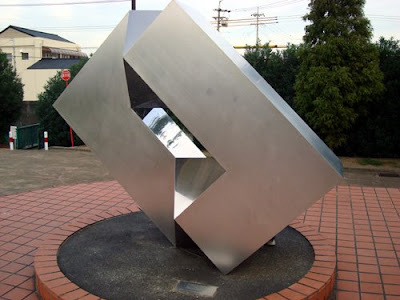
Hekinan City Tatsukichi Fujii Museum of Contemporary Art
Otowa-cho 1-1
Tel: 0566 48 6602
Hours: 10am-6pm; Closed Monday
Hekinan Station can be reached on the Meitetsu Line from Nagoya, Kanayama and Toyota Stations changing at Chiryu.
The museum is a short walk south of the station, across the road from the Saihoji Temple, with is ancient, spreading pine tree.
© JapanVisitor.com
Yahoo Japan Auction Service
Book a hotel in Japan with Bookings
Tokyo Serviced Apartments
Japan Friends
The Japanese Spa: A Guide to Japan's Finest Ryokan and Onsen
Tags
Japanese art Hekinan Art Nagoya sculpture
清沢満之
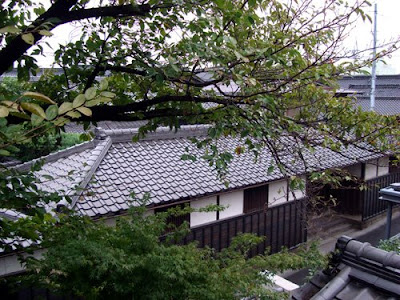
Kiyozawa Manshi (1863-1901) a Buddhist priest and philosopher, was born in Hekinan, a small town east of Nagoya. The traditional samurai house where he died young of tuberculosis has been preserved as a museum dedicated to his life and works.
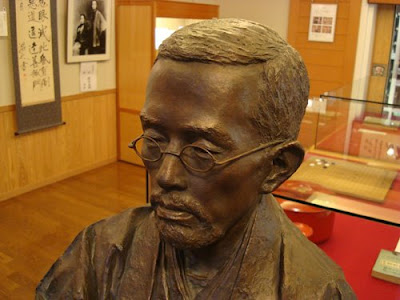
On display are manuscripts, some of them written in perfect English and Kiyozawa's book collection preserved in a sealed room.
From a middle-ranking samurai family, Kiyosawa was educated at Tokyo Imperial University studying Western philosophy under the American professor Ernest Fenollosa. Kiyozawa readings of such philiosophers as Fichte, Hegel, Leibniz and Spinoza influenced his own Buddhist philosophy and teachings.
After graduation Manshi moved to Kyoto's
Honganji Temple and later became dean of Shinshu (later Otani University) where he taught the history of philosophy.
Contracting TB early in his life, Manshi, a renown ascetic, returned to his ancestral home to die, passing away in a tiny tatami alcove so he would not take up too much space in the main house.
Kiyozawa Manshi is remembered as an educator, reformer and scholar who inspired a new generation of religious thinkers to reinterpret and re-evaluate the Shinshu faith.
Read more about Kiyozawa ManshiAccessKiyozawa Manshi Memorial MuseumHamaderamachi 2-19-2
Hekinan
447-0845
Tel: 0566 42 0044
Hekinan Station can be reached on the Meitetsu Line from Nagoya, Kanayama and Toyota Stations changing at Chiryu.
The museum is a short walk west of the station.
Map of Kiyozawa Manshi Memorial MuseumYahoo Japan Auction ServiceBook a hotel in Japan with BookingsTokyo Serviced ApartmentsJapan FriendsHappi CoatsJapanese For Busy PeopleTagsKiyozawa Manshi Japanese Buddhism Hekinan Aichi


